I've been hearing about the Tasting Room for years now, usually in conversations with "foodies." You know the general line of questioning: "Just went to X. Have you been?" "Oh yeah. The meatballs are out of this world. Almost as good as Y's." "But not as good as the Tasting Room." "The Tasting Room!" "Love the Tasting Room!" "Love!" At which point I usually fall silent. Since I've never been to Tasting Room, the once-tiny, now relocated restaurant that cooks with the freshest Greenmarket ingredients, I am unable to step up to this gourmet throwdown.
Basta, I decide. Now that the Tasting Room has moved to a roomier location, it is time to give it a try. I enlist several friends for the task.
Though the space may be bigger, the door policy at the Tasting Room can still be a pain. When one of our party is unavoidably detained, three of us have to wait at the bar until the fourth arrives, despite our entreaties that she is definitely on her way. Making everyone wait would be understandable if it were a busy weekend night with multiple seatings, but it is 8:30 on a Thursday, and later we see that the place pretty much clears out after 10, with no one waiting for our table. I know that which of I speak is controversial, but still... I tend to side with the customer on this one.
At least the delay affords us time to have one of the excellent cocktails at the bar - an old fashioned, in my case. The bar area is a pleasing hybrid of sexy and welcoming, when you can get a seat. If you can't get a seat in this small front area, you will feel that you are always in every server's way.
My friend arrives; we are finally taken to our table in the back room.
"What is this place?"
"It looks like a conference room."
"No - a wedding tent. A cross between a conference room and a wedding tent."
"There are actual poles with weird dried leaves on them."
"Are these paintings done by mental patients?"
"What's up with those FedEx packages on the ledge? Is that supposed to be decoration? Hey! There's the package I never got at work the other day!"
Did I mention we can be snarky at times? Nevertheless, our waiter is nice and generally attentive. We start ordering - not always an easy task with this crew. There is something for everyone on the varied menu, though we do have some difficulty distinguishing between a "taste" and a whole dish, since most of the entrees and appetizers are listed at both price points. The waiter explains that a "taste" consists of just a couple bites, and therefore is not recommended for sharing, while ordering the larger-size portion would be good for the whole table. Thus, we make those of us who order unpopular dishes keep it to a taste.
The food starts coming in waves. N.B. that the menu changes daily, but some of our favorite dishes appeared in other incarnations in other reviews, so the selections I mention here may very well resurface. We have the late summer salad, which is more interesting than expected, with crisp new greens and a generous sprinkling of fresh soft feta. Rarely have I tasted fish as good as the butterfish escabeche, my (initially unpopular) small "taste" portion that arrives on a swirl of cannelini bean puree. The appetizer-size portion of kingfish on a bed of arugula isn't anything to write home about. We place the kingfish and the butterfish next to each other.
"It's the same size on a bigger plate."
"It's the same, but eight dollars more."
The beef short rib stew is our favorite of the appetizers, delicious and lively. We identify the distinguishing herb as mint, which gives it an interesting Vietnamese twist.
During the lull between courses, I notice that everyone in the room looks terrible. Fortunately, there are no mirrors, so I can't see how horrible I myself look. Only now does the lighting register - it's extremely unflattering, which would make me avoid this place as a potential date locale, unless you're absolutely sure your beloved wouldn't leave you at your ugliest.
The entrees arrive. Two of these are amazing: the meatballs, made with grass-fed beef, are melt-in-your-mouth good. I sense myself losing control and devouring them at a rapid pace before I remember to share. No one notices, because they are all attacking the fabulous eggy bread pudding with hen-o-woods mushrooms. I elbow my way in before that disappears as well.
Waiting for the check as things quiet down and the dining room begins to empty, we are feeling fat and content. The quality of the ingredients really shows through in each dish at the Tasting Room, and I get the sense that no expense was spared in sourcing them out. This feeling is reinforced by the number at the foot of the bill, which is much more than those of our usual casual dinners out. (OK, so we had some wine. But it was the cheap wine.) No one is all that happy anymore.
"Eighty-five dollars!"
"I guess that's the last meal I eat for the week."
I am satisfied, though I don't know if I would do it again. Not a great date place because of the decor, but not a great casual friend place because of the expense. Who would go here with me? Only a gastronome who cares about food, food, and more food. Only somebody who brags about meatballs.
In short, only somebody just like me. I make my apologies and slink out the door.
The Tasting Room
264 Elizabeth Street, between Houston and Prince Streets
212-358-7831
10/31/2006


10/27/2006
Tea at the St. Regis
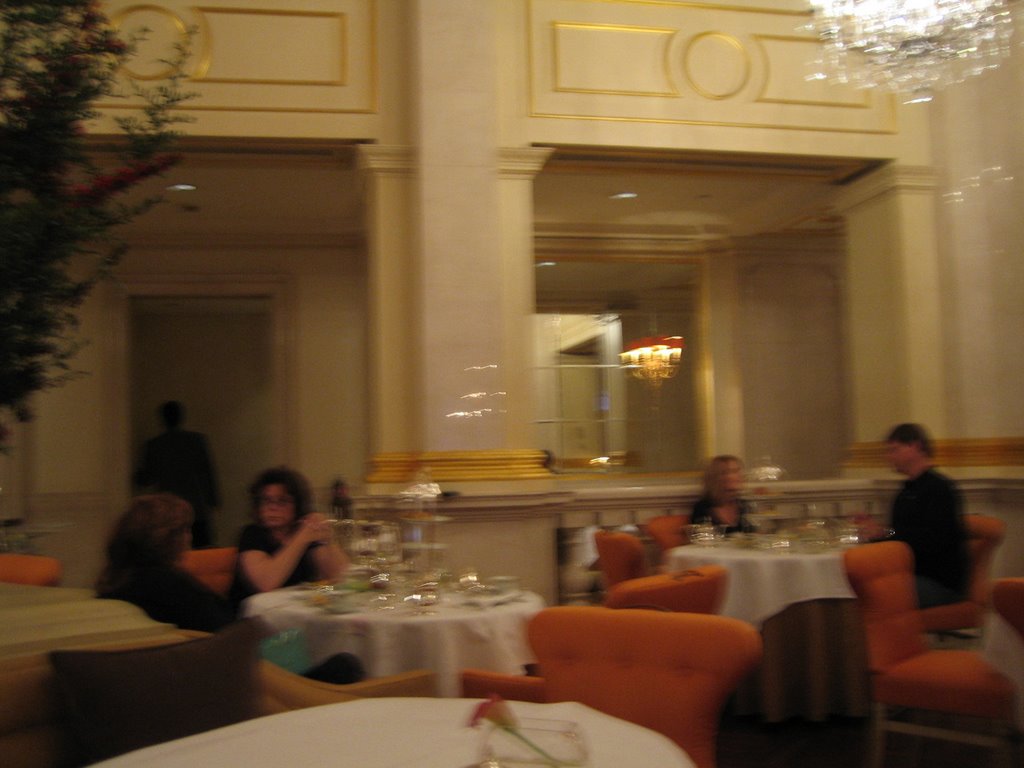 Forget the Plaza: all you need to feel like Eloise is tea at the St. Regis. First, there is the old world beauty of the high-ceilinged, gilded dining room itself - Astor Court, so named after John Jacob Astor IV, who built the hotel in 1904. Then the impeccably presented and delicious teas, cakes and tea sandwiches all conspire to make you feel like a very special visitor.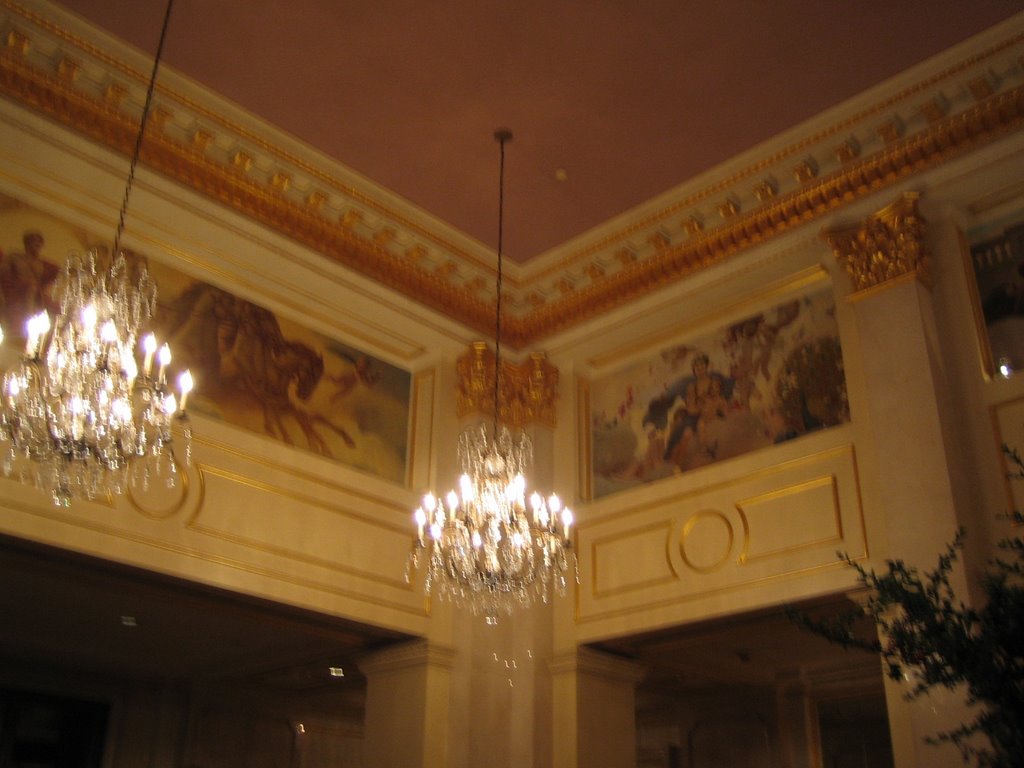
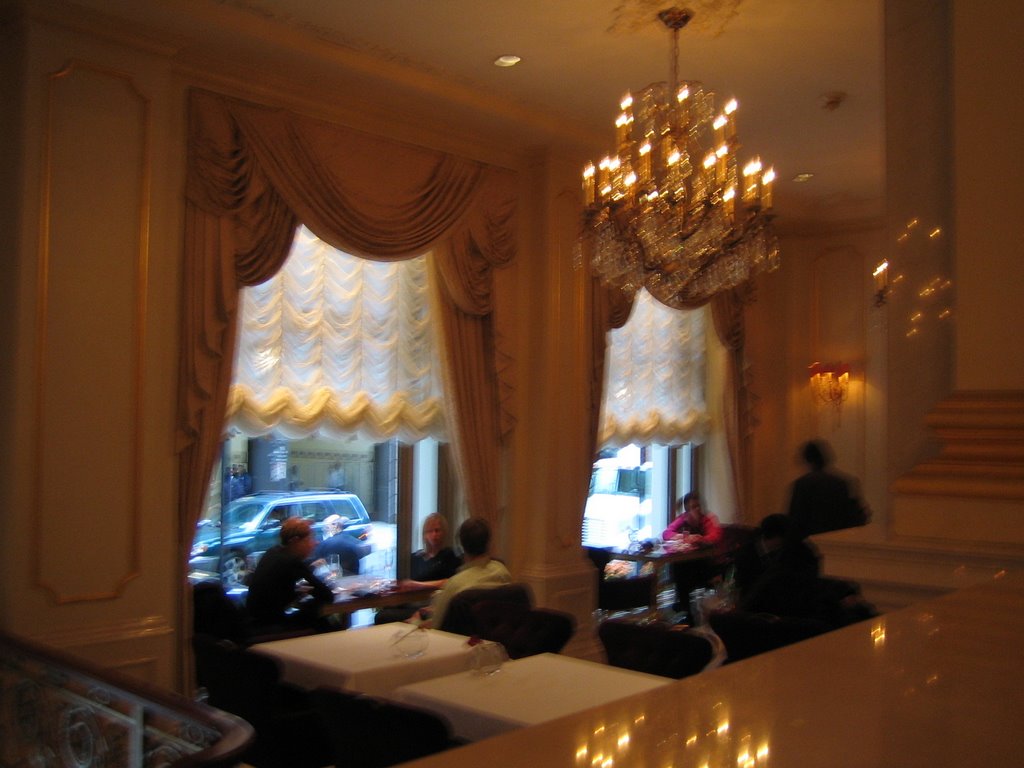
Tea at the St. Regis also presents a solution to a prevalent New York problem. It's so easy for visiting relatives to get here, but so seemingly difficult for them to stay the night. Is it the lingering visions of '70s muggers, or is the high price of hotels even scarier? Whatever the case, if you ever have a visiting aunt in town for just the day, take her here.
 On the day my own aunt arrives, we get to the St. Regis at about 3:30. As soon as we are seated, the tea sommelier appears. She asks what sort of teas we usually drink - black, green, or white? English breakfast or Earl Grey? - then makes some thoughtful recommendations from the 25-plus teas available. We choose the Hao Ya "A" tea (Chinese black), and the St. Regis blend, which she compares to Earl Grey. "Lots of bergamot," she says, and I think of a favorite perfume. This turns out to be not such a good thing, because the St. Regis blend is so perfumy that I might have just taken a swig of Shalimar. But the tea balances out with more steeping time, and it is beautifully served: poured from individual pots, through an ornate silver strainer set over your teacup, with lemon and a tiny individual jar of honey on a plate alongside.
 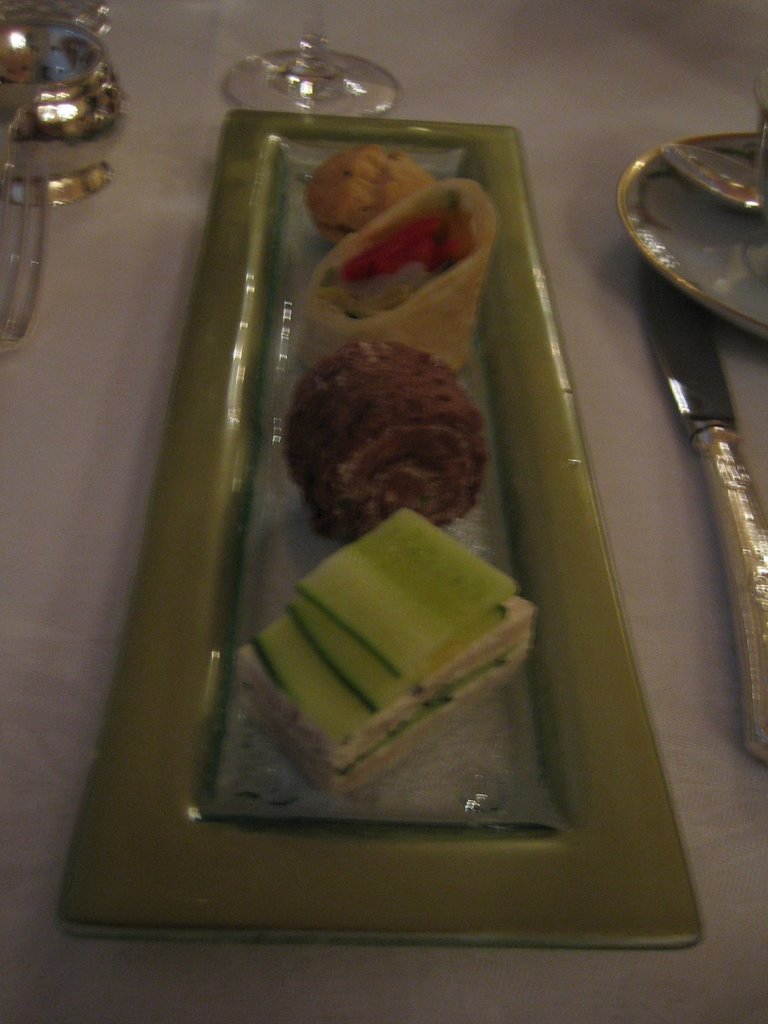 A parade of nibbles arrives. First, a mushroom and artichoke quiche, which is good though a little dry. Fortunately we have taken the sommelier's advice to ask for water immediately, while the tea brews. The menu has recently been divided into sweets and savories. The savories appear first, not mixed up on the tea tray as used to be the case, but presented almost like sushi, with a Japanese eye for design and color. Little sophisticated and modern twists make the sandwiches interesting. Mint is flecked throughout the cucumber sandwich, and chicken curry salad is spiked with mango. Smoked salmon comes wrapped up into a pinwheel with pumpernickel. The kitchen veers a little too far towards modernity, though, when they include a mini grilled vegetable wrap. I can only wonder which beloved tea sandwich was sacrificed to make room for that one. The new sushi-esque presentation looks pretty but leaves me wanting about five more of the low-guilt cucumber sandwiches. When the tea sandwiches used to be presented en masse, I got to eat much more of them, though admittedly, this might have been because I was eating everyone else's.
 Then come the sweets. I could subsist forever on good scones and clotted cream, and the St. Regis' are no exception. Instead of clotted cream, they use Devonshire cream, which is slightly sweeter and more buttery than regular clotted cream. In any case, it's authentic, and the authenticity of scones and cream is the area where most tea services fall short. Also served with the scones are two kinds of jam and lemon curd, sweet and thick.
 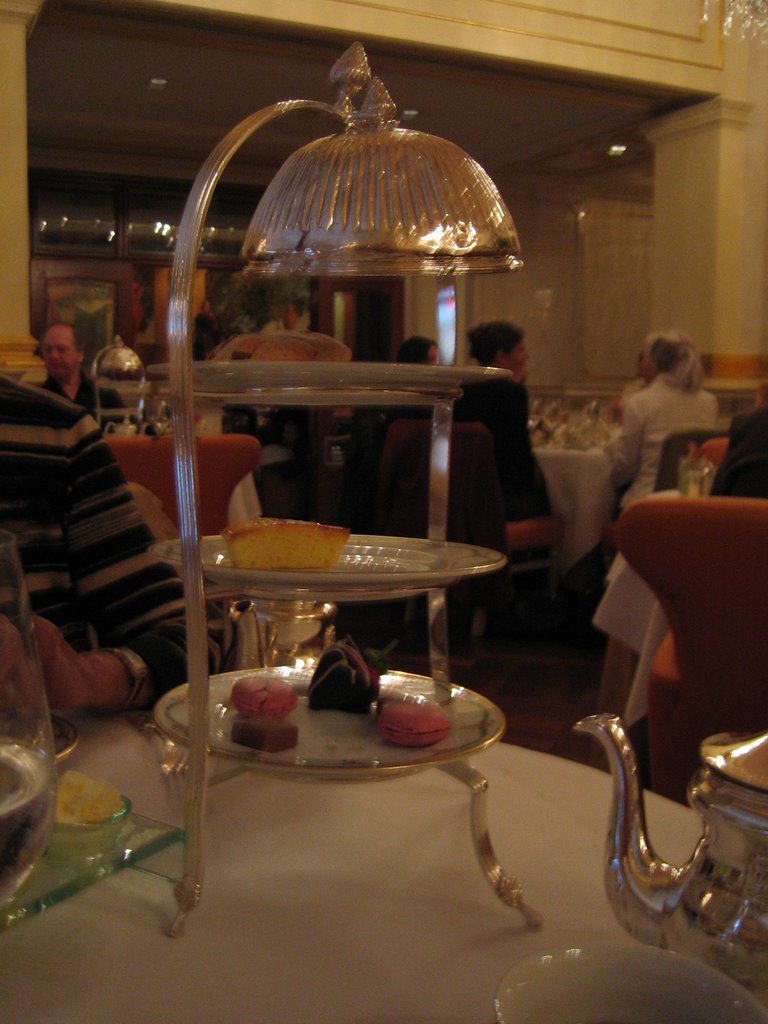 The tiered tea tray is also laden with lemon cakes, chocolate covered strawberries, and little chocolates filled with raspberry jam. I have to come clean here and admit that I don't really like sweets, thus the dearth of dessert reviews on this site. But I liked these cakes and candies, and the strawberries were delicious.
 By the time we leave, a good hour and a half after we arrived, Astor Court is packed with tea takers. Some of them are drinking champagne with their cakes and pastries. Marie Antoinette would approve.
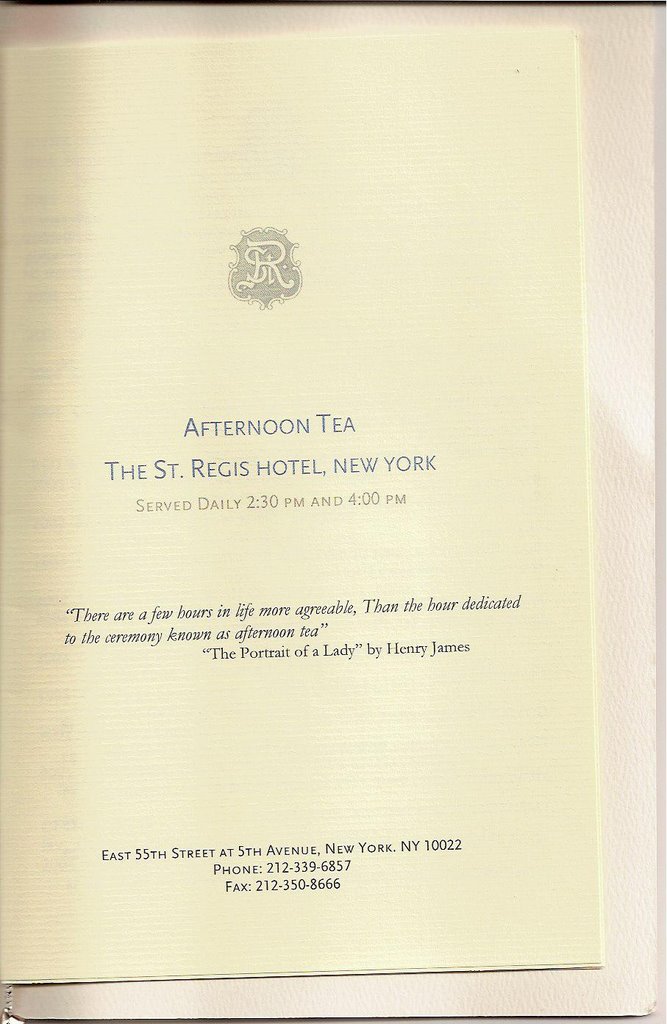 The St. Regis Hotel
2 East 55th Street, between Madison and Fifth Avenues
212-753-4500
10/25/2006
Madison Avenue, Upper East Side
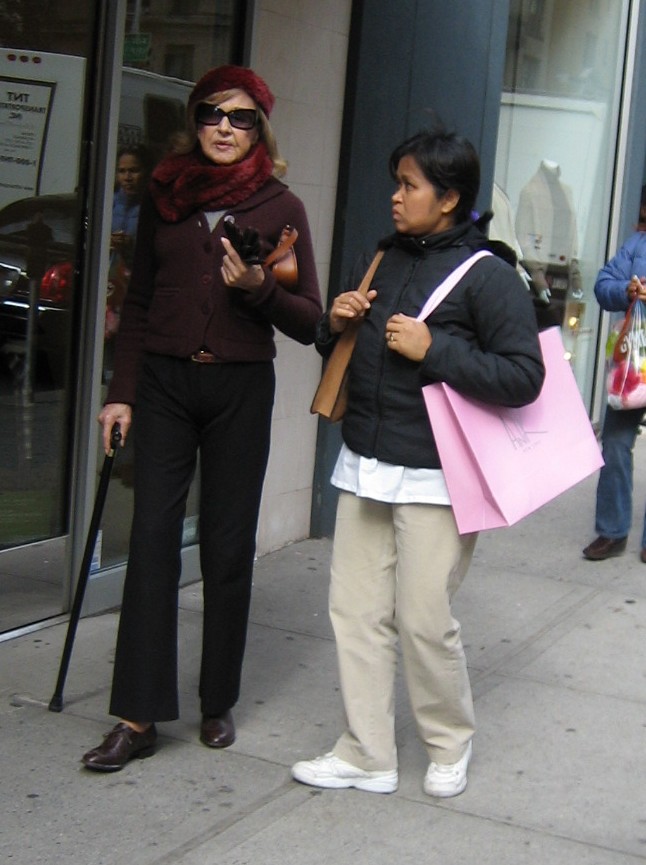
 Big bags and little dogs, double-breasted coats, and lots of leopard add some panache to the fuddy-duddy fashion of the Upper East Side, where riding boots and Barbour jackets never went out of style.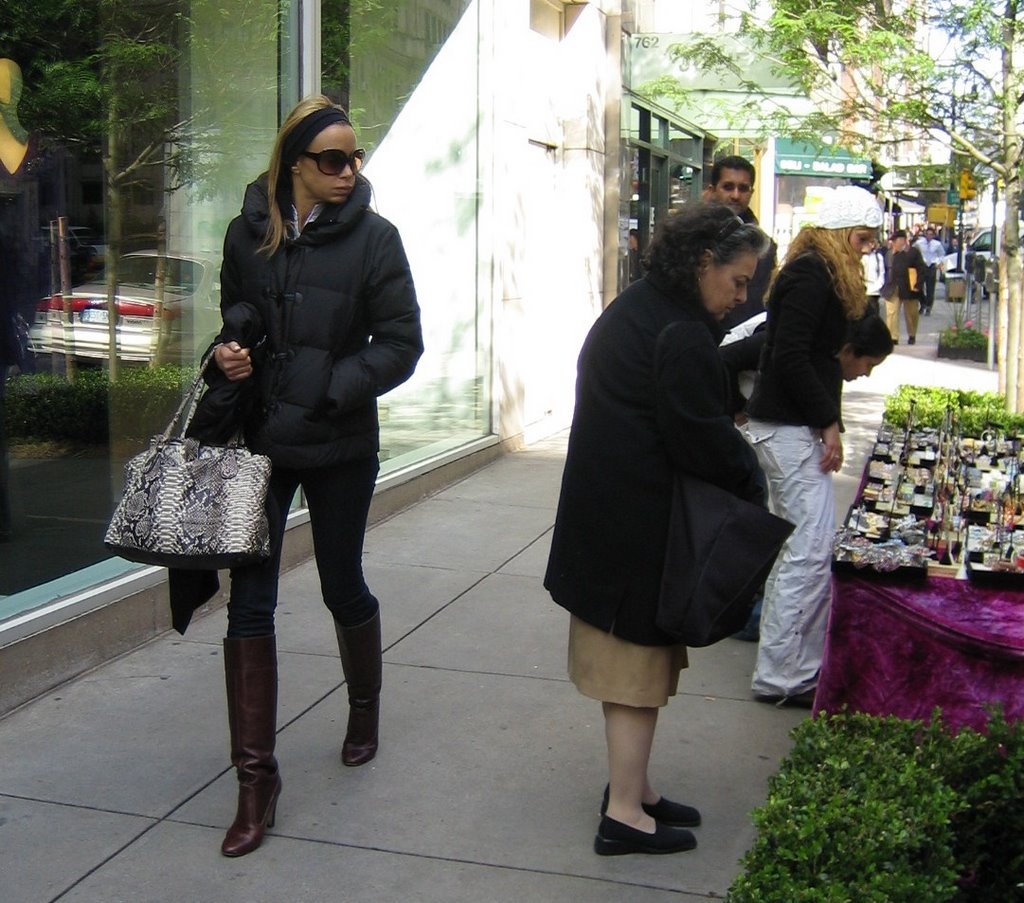












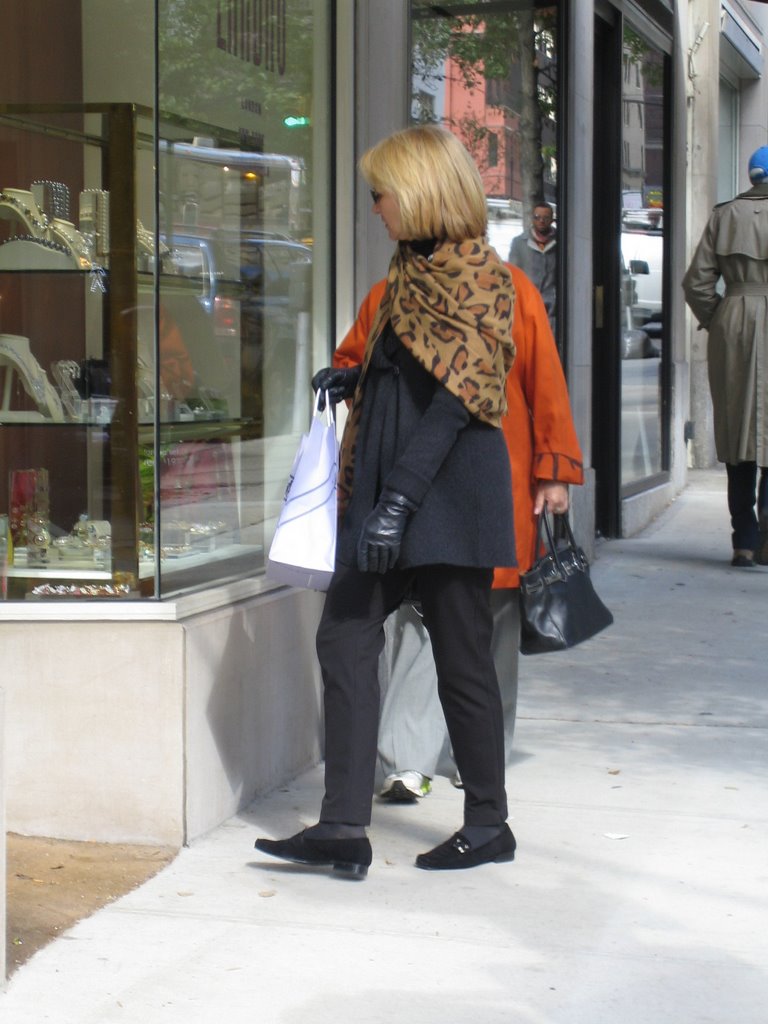















10/20/2006
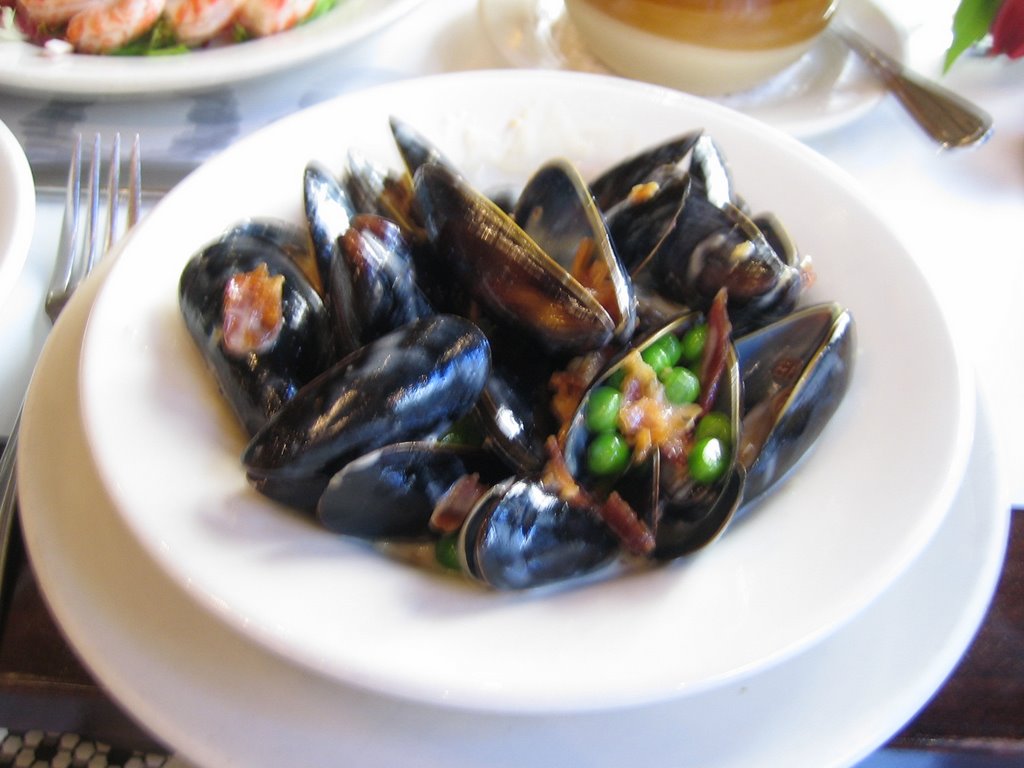
The Copycat Chef: Mussels with Bacon and Peas from Angus McIndoe
 Many reviewers, amateur and professional, have raved about the mussels at Angus McIndoe. They're true country comfort food, perfect for this time of year. As soon as I tasted the wonderful bacon-and-peas cream sauce, I thought of a recipe from The New Basics Cookbook, by the same authors of The Silver Palate: Pasta with Prosciutto and Peas, one of my all-time favorites.
 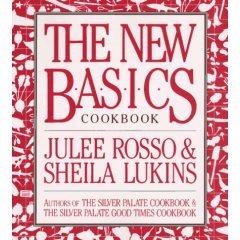 In a somewhat bastardized version of an Italian sauce, the prosciutto is sauteed slowly with butter and flour to make a light roux, then the cream and other ingredients are added. The Angus McIndoe cream sauce had the same bacony cohesiveness as the Rosso-Lukins version.
 The combination of mussels and cream was harder to source. Where did this come from? The recipe seems to owe more to Normandy, Brittany, and the Île de Ré, famed land of mussels, than Scotland. Anthony Bourdain's version of mussels in cream sauce has many of the same qualities as the Angus McIndoe dish. By subtracting some of the particularly French ingredients - Pernod, for instance - I might find a reasonable facsimile of the Angus McIndoe version.
 I cooked the mussels in beer instead and added some of their cooking liquid to the cream sauce. Surprise: it was completely disgusting. Here I had bought a whole loaf of French bread to sop up the sauce, which I couldn't even stand to eat. It was horribly bitter, especially with the addition of parsley. The lesson: don't drink beer with cream. I thought I learned that over a decade and several White Russians ago, but I must have forgotten.
 Trying again, I took a page from Jacques Pepin and used his suggestion of Sancerre as an excellent cooking base for mussels. This worked a lot better. The final product, though, should really have a certain shine to it. The mussels at Angus McIndoe looked positively glazed, they were so shiny. This reminded me of Lidia Bastianich's Linguine with Bacon and Onions, in which an egg yolk is added at finishing time to achieve a similar shiny, thick sauce.
For the first version of this dish, I used real live peas instead of frozen ones, but then I figured, why bother. At Angus McIndoe, the peas were so evenly sized that they must have been frozen, and the flavor of frozen thawed peas was actually better in this sauce.
 In a dish this simple, the quality of the ingredients is even more important. For the first attempt, I went to Wild Edibles on Third Avenue and 35th Street (also at Grand Central Market) for the mussels. The salesguy there was very helpful and friendly, explaining why they only sell Prince Edward Island mussels and even knocking each of them before putting them in a plastic baggie to make sure the ones he sold me were all alive. The next time around, I went to Citarella, whose mussels were almost as good, but where the service wasn't quite as helpful. When I asked the Citarella salesguy where the mussels were from, he responded "Canada." Last I checked, Canada is a pretty big country. (They were also from P.E.I.) But, miracle of miracles, Citarella apparently has caved to popular demand and is now stocking their freezer with items a little less esoteric than just edamame beans: they finally carry frozen peas and other frozen vegetables.
 I used Schaller and Weber Black Forest bacon, which is the best I've found in the city. You can get it on Fresh Direct, but you have to go to a nice off-line grocery store like Garden of Eden on 14th Street to get it sliced thin, which is very important for this recipe.
A note to the fat-phobic: Though this is a seafood dish, it is decidedly not low-fat; in fact it's pretty much a heart-attack-in-a-bowl. Attempts to make a lower-fat version, using half & half instead of cream, for instance, failed and are not recommended.
Mussels with Bacon and Peas à la Angus McIndoe
Time: 35 minutes
1.6 lb. mussels
1/4 lb. bacon, very thinly sliced
1 tbsp butter
1 tbsp flour
1 cup heavy cream
1/2 cup frozen peas, thawed
1 tsp sea salt
several grinds of black pepper
3/4 cup Sancerre or other dry white wine
1/2 cup water
1 egg yolk
Scrub mussels under running cold water with a wire brush until their shells are clean and shiny. Check for any bits of beard poking out of the shells, and pull them out. (You probably will not find many, if any at all, with P.E.I. mussels.)
Heat the butter until foaming in a wide saute pan. Add the bacon, stir a couple times, and reduce the heat to medium-low. Cook for 1 minute, then sprinkle the flour over top and stir again. Continue cooking for about 3 minutes, until the bacon is wilted and has rendered a good deal of its fat.
Whisk in the cream and raise the heat to medium-high. Continue whisking until sauce begins to bubble and thicken, about 1 minute. Whisk in peas, salt, and pepper, and turn the heat down to the lowest temperature.
Bring the wine and water to a boil in a roomy pot, preferably fitted with a glass lid. Add the mussels and boil 3-4 minutes until they all yawn open widely, shaking the pot every once in a while to redistribute the mussels.
Scoop them out with a big wire skimmer, then carefully decant 2/3 cup of the cooking liquid, leaving any sandy residue at the bottom of the pot. Whisk the cooking liquid into the cream sauce, raise the heat to medium-high, and continue whisking 1 minute until the mixture begins to bubble and thicken again. Turn off the heat and mix in the egg yolk, then then mussels in their shells, tossing to mix the sauce evenly throughout.
Serve immediately with crusty country bread.
Serves 2.
Subscribe to:
Posts (Atom)