Mexican Cotija cheese isn't for sale at New York's fancy cheese emporiums, but you can find it in some corner bodegas. If your hunt for authentic cheese is successful, here's a recipe for a Mexican salad for you. It ran many years ago - in the LA Times, of course.
Mexican Poblano and Tomato Salad
4 poblano chiles
2 tomatoes, diced
1/2 cup thinly sliced red onion
2 cloves garlic, minced
1 tsp. dried Mexican oregano, crumbled
3 tbsp. chopped cilantro
3 tbsp. lime juice
1/2 tsp sea salt
1 head butter lettuce
1/4 cup crumbled Cotija cheese
wedges of lime dipped in chile powder, for garnish
Roast the chiles on a gas burner or grill until charred all over. Place them in a Ziplock bag and close. Let them stand until cool, then slough off the charred skin. Core and seed them, then cut lengthwise into thin strips.
Toss the chiles with tomatoes, onion, garlic, oregano, cilantro, lime juice, and salt. Cover and let sit for 30 minutes. Arrange butter lettuce on four salad plates, top with pepper mixture, and sprinkle with Cotija cheese. Serve with lime wedges.
Serves 4.
Variation: If you can find requesón cheese, try substituting it for Cotija. Combine a 1/2 cup of requesón with the chili mixture, and instead of letting it all sit, heat it gently on the stove for about 5 minutes, until warmed through. Serve on top of cool butter lettuce, garnish with limes. Think of it as a salad version of La Superior's rajas.
Showing posts with label the copycat chef. Show all posts
Showing posts with label the copycat chef. Show all posts
4/13/2009


10/17/2007
German Jazz Guitarist Pasta
 Reading Mark Bittman's article about pasta in the Times today, I couldn't help but be reminded of a German jazz guitarist I knew years ago. This was no ordinary German jazz guitarist, but a half Italian German jazz guitarist and who made a mean penne arrabiata chock full of vegetables. He and his cousin Fabio, also a jazz guitarist, lived in Dumbo in an old gun factory that had been (illegally) converted into loft apartments.
 Pasta was one of their favorite things to make, particularly since the gun factory was only heated from 9-5 on weekdays, and eating hot pasta was one way to stay warm. It was the German jazz guitarist who taught me that you must put an entire handful of salt into the pasta water. He also insisted on Pomi tomatoes, since they contain none of citric acid that can make canned tomatoes sour. Like the recent immigrants mentioned in Bittman's article, they too were overjoyed by the bounty of food available in America. They bought lots of cheap vegetables at the local Korean deli and shoplifted the expensive Parmesan.
The resulting pasta dish was just as filling as it was nutritious. And the cheese on top? For us, it was worth the risk.
German Jazz Guitarist Pasta
 1 clove garlic
1 zucchini
½ yellow onion
5 oz. white mushrooms
2 tbsp extra-virgin olive oil
2 cups Pomi chopped tomatoes
1 tbsp tomato paste (look for the kind in the tube)
1 tsp drained capers
Oregano
Red pepper flakes
Salt to taste
1/4 lb. penne
Parmesan cheese
Put a handful of kosher salt in an 8-quart pot of water and bring it to boil.
While waiting for water to boil, mince the garlic. Cut zucchini on a diagonal. Slice onion in wedges lengthwise. Slice mushrooms. Heat oil over medium-high heat until it begins to shimmer. Add garlic, stir a few times, then add the rest of the vegetables. Saute, stirring constantly, until the zucchini just begins to get transparent in the center. Add tomatoes, tomato paste, capers, two dashes of oregano, one dash of red pepper flakes. Heat on high until it bubbles, then keep on a low simmer, uncovered. By now the pasta water should be boiling; add penne and cook.
Reserve some of the pasta cooking water. Drain penne while still al dente. Check the sauce’s seasonings and salt to taste. Add some of the reserved pasta cooking water if sauce is too thick. Finish cooking the penne in the sauce. Raise the heat and stir constantly until some of the sauce is absorbed.
Serve topped with a generous amount of freshly grated, legally acquired Parmesan.
Serves 2 jazz guitarists.
2/26/2007
The Doodle's Bacon-Egg-and-Cheese-on-an-English
 Everyone should know how to cook an egg. I mean, really: what else are you going to offer your date the next morning? Cereal?
Yet so many cooks, from those in your local diner to high-end brunch places, are capable of messing it up. The key is giving the egg lots of love and attention, something that the Yankee Doodle in New Haven has done since 1950.
This recipe is very quick, but you must operate at lightning speed to execute it well. Pretend you're a line cook. "Bacon-egg-and-cheese-on-an-English" is an order shouted from counter to cook, and it's done here in the style of Lew Beckwith, Jr., the Doodle's great master chef in the 90's.
Bacon Egg and Cheese on an English
1 Thomas' English muffin
2 strips Oscar Mayer bacon
2 tablespoons salted butter, softened
1 large egg at room temperature
1 slice pale yellow American cheese
Preparation:
Get out all the equipment you'll need: a large, 2 burner griddle, or an omelette pan and a skillet. A spatula, a breadknife, a regular table knife for the butter, a long fork for the bacon, and a small domed saucepan lid. You'll also need a toaster, which should be placed right next to the stove.
 Lay out all the ingredients in order of appearance. Slice the English muffin in half with the bread knife and put the slices in the toaster (do not toast them yet). Put the bacon slices on waxed paper. Soften a stick of unsalted butter by nuking it on defrost for 20 seconds, if necessary. Bring the egg to room temperature by running it under warm water, if necessary. Unwrap the cheese from any cellophane covering. Place all these ingredients next to each other, as shown.
1. Heat a skillet (or cooler half of the griddle) to medium-high. It's ready when a few droplets of water splashed on the pan skittle and evaporate.
 2. Lay the bacon slices on the pan. They should be sizzling loudly but not alarmingly so.
3. Watch the raw pork fat off your hands.
4. Start toasting the English muffin.
5. Turn the heat on the omelette pan to high.
6. At about the 2 minute mark, the bacon should be beginning to brown. Carefully flip it.
 7. Put a tablespoon of butter in the omelette pan and swirl it around as it foams. Break the egg against the flat surface of the counter and open it onto the omelette pan, leaving the yolk whole. The English muffin will pop up about now - just leave it in the toaster to stay warm.
8. When the egg white is set about halfway through and the bottom isn't brown yet, about a minute into cooking, carefully flip the egg without breaking the yolk. (Or, if you prefer a hard-cooked yolk, break it with the edge of the spatula before flipping it.) Don't let the egg fold over onto itself.
9. Working very quickly, put the cheese on top of the egg, take the bacon out of the skillet and put it on top of the cheese, and cover the whole thing with the small domed lid.
10. Remove the English muffin from the toaster and smear both halves with the remaining tablespoon of butter. In the time it takes to do this, your egg will be cooked.
11. Remove the lid and scoop the bacon, egg and cheese with a spatula, slide it onto the English muffin, and voilà: you have a Doodle special.

The yolk will burst when you bite into the sandwich. Never fear, that's what it's supposed to do. It's deliciously messy.
Total cooking time: 4 minutes, 40 seconds.
Serves 1.
To make 2, lay out twice as many ingredients in the beginning, then repeat the entire process. (The first egg sandwich should stay warm. Cover it with foil if you want.) Or, after you have a lot of experience, you can try making more than one bacon egg and cheese at a time. But I've only seen the Doodle cooks master that.
2/13/2007
Peanut Brittle Heart
 At a shul in the East Village one night last week, there was a PEN Author's Evening for Elizabeth Kolbert, author of Field Notes From A Catastrophe: Man, Nature, and Climate Change. Most of the sobering discussion focused on what we as individuals could do to shake things up, and it all culminated in a grand finale. Conceptual artist Anne Charlotte Blanchot of Ebullition Design worked with caterer Patricia Catenne of Quintessencia to create a dessert called "Broken Planet." A beautiful round of peanut brittle painted with chocolate continents was shown to the crowd. "Zees is what happens if we don't take care of the earth!" our French hostess cried, and smashed it to pieces with a mallet.
 It was dessert as performance art: dramatic, entertaining, and delicious. The peanut brittle's salty-sweet taste is very much on trend. I thought a similar concept might work for Valentine's Day. Simply pour the molten brittle into a buttered heart mold or paint the brittle with a chocolate heart, let it harden, and clobber it to pieces at the dinner table. If you're single, it should be cathartic; if you're doing it for your significant other and he or she doesn't laugh, you should effect radical change immediately.
Peanut Brittle Heart
Adapted from Patricia Catenne of Quintessencia
2/3 cups water
2 cups sugar
1 stick unsalted butter, cut into pieces
1/3 cup light corn syrup
1/2 teaspoon baking soda
2/3 pound (1 pint) excellent-quality roasted salted peanuts, skin off*
2 tablespoons salt
3 oz. (1 bar) semisweet chocolate
Butter a large heart mold or a large square of parchment paper and a rolling pin.
 Stir water, sugar, corn syrup and butter in a large heavy saucepan over high heat until sugar and butter dissolve. When the butter is completely melted, turn down the heat and affix a candy thermometer to the side of the pan. Make sure the end of the thermometer is near the bottom of the pan but not touching it. Let the mixture boil until it becomes golden brown and the candy thermometer registers 295 degrees, about 20 minutes.
Turn the heat down to medium-low and remove the thermometer. Add baking soda and salt; stir briskly for a few seconds until the mixture foams. Pour the peanuts into the mixture, and immediately turn the whole thing into the heart mold or onto the parchment paper. (You do not need to stir it first; the candy is already molten.) Quickly spread out the brittle in a thin, even layer using a buttered rolling pin or spatula. Then, ignore your peanut brittle heart until it turns cold and hard.
Break up the chocolate and melt it in the microwave for 1 minute 30 seconds, taking it out once to stir it. Paint a chocolate heart on the brittle and let it dry.
To serve, smash the heart into pieces with a mallet. Enjoy!

* Use a brand like Bentzy's or other freshly roasted nuts sold by the pound.
1/21/2007
Sunday Ragù
Every winter I like to make a huge vat of meat sauce and freeze it in small portions for the bleak months ahead. Though I am not copying any particular restaurant version here, the recipe is derived from Regina Schrambling's nearly perfect recipe for lasagna that appeared in the Times years ago. The lasagna was great, but I was floored by the sauce. I tweaked it to make it more Italian-American than authentic Italian - more tomato, more oregano, less meat. Even a dash of garlic salt at the end, though yes, I know that is cheating.
Make it while watching Goodfellas on a Sunday afternoon. Just remember to keep stirring the gravy.

Sunday Ragù
 1/2 cup extra virgin olive oil
1 large yellow onion, diced
1/2 cup finely grated carrot
1 clove garlic, minced
6 ounces pancetta, sliced 1/4-inch thick and diced
1/2 bottle good red wine, preferably Italian
3 28-ounce cans whole tomatoes, preferably Muir Glen organic
3 tablespoons tomato paste
3 whole cloves garlic, lightly smashed
1 tablespoon dried oregano
sea salt to taste
a few grinds of black pepper
1/2 pound of Italian sausage, a mix of hot and sweet
1/2 pound ground sirloin
1 egg
1/4 cup freshly grated Pecorino Romano
1 clove garlic, minced
1/4 cup finely chopped Italian parsley, leaves only (about 3 sprigs)
flour for rolling
garlic salt to taste
Heat 1/4 cup of the extra-virgin olive oil in a heavy Dutch oven over high heat. When the oil begins to shimmer, add the onion, carrot, minced garlic, and pancetta, stir once, and reduce the heat to low. Continue stirring for 10 minutes, until the onions are wilted. Add the wine, bring to a boil, then simmer on medium-low heat for about 20 minutes, until the wine is mostly reduced. Open the canned tomatoes and snip them in pieces with kitchen shears while still in the can, then add the tomatoes and their juices to the pot. Add tomato paste, oregano, and smashed garlic cloves. Add salt and pepper, but err on the side of undersalting at this point, because you still have a lot of reducing to do. Bring to a simmer, then cook uncovered over the lowest heat for 1 hour. Don't let the sauce stick or it will burn.
Meanwhile, make the meatballs. Combine the ground sirloin, egg, cheese, minced garlic, parsley, and some salt and pepper in a bowl. Roll the mixture into golf-ball size balls, then roll the balls in a plate of flour to coat them. Heat the remaining 1/4 cup of olive oil in a skillet and brown the meatballs on all sides over medium-high heat. Do not cook the meatballs all the way through, just brown them. This should take about 3 minutes. Remove them from the skillet and reserve.
Slice the sausages open lengthwise and turn their meat out of the casings into a clean skillet set over medium-high heat. When they really begin to sizzle, turn the heat down to medium-low and saute until they are about halfway cooked. Remove the sausage with a slotted spoon and sprinkle it with salt and pepper. As Lidia Bastianich says, if you season each individual element of the sauce before combining them all, chances are you'll get a final product that's seasoned to taste.
After the tomato sauce has been cooking for 1 hour, add the sausage and meatballs and stir. Continue to simmer on the lowest heat, stirring at least once every 10 minutes, for at least another 1 1/2 hours (or until Goodfellas has ended). Don't forget to stir the gravy.


When the sauce is done, fish out the meatballs with a large spoon, chop them finely, and return the meat to the sauce and stir. Taste for seasoning, adding oregano and garlic salt as necessary.
How To Cook Pasta:
Fill a 5-quart size pot at least halfway to the top and throw in a handful of kosher salt. Yes, a handful. Never fear, you won't be consuming all the salt, just the salt that's absorbed by the pasta, a tiny fraction of the total amount of salt. The point is to make the water thoroughly salty, because then the boiling point is higher, and the pasta will be al dente and slightly, pleasantly salty.
When the water comes to a rolling boil, add the pasta. As soon as the water returns to a boil, set a timer to the minimum time on the package directions. When it's done, drain the pasta and return it to the still-warm pot. Stir in butter for an Italian-American take, if desired, until it is absorbed the the pasta. Add several spoonfuls of hot sauce to the pot, turn the heat on medium, and stir for a minute until the pasta begins to absorb some of the sauce. Pour into a bowl, top with a bit more sauce and a sprinkling of fresh grated Parmesan.
Variations on the Sauce:
For ragù Napoletano: Order the pancetta as one large 6-ounce piece and cut into large chunks. Cut the sausage into 1-inch chunks. Prepare the rest of the recipe as above, but at the end of cooking, remove all the meats and the garlic cloves. For a particularly refined version, you can pass the cooled sauce through a food mill. Serve with the reserved meatballs or sausage, or just as a sauce for pasta. Warn the vegetarians.
If you get hungry while making the sauce: You can always eat the Beaujolais Nouveau version of the sauce, that is, a bright, less complex version that's only just ripe for the picking. After an hour of cooking, before adding the sausage and meatballs, spoon a small amount sauce over pasta.
To freeze: Let the sauce sit overnight in the refrigerator, then ladle into 1/2 pint containers (for one serving) or pint containers (for two). I keep takeout containers for this purpose. Good for up to three months in the freezer. Reheat on the stove or in the microwave.
Makes 10 portions.
12/20/2006
Glogg
 This recipe for Scandanavian mulled wine, glogg (pronounced GLOOG), is adapted from the Market Cafe, where proprietress Fanny Farkas used to serve a number of holiday specialties from her native Sweden.
Alas, the Market Cafe is not serving glogg this season, since Fanny seems to be traveling, but it's simple to make yourself. (I like making it just so I can say the word "glogg" over and over again.) The only difficult part is finding the cardamom pods, which can be had at Dual Specialty Store on First Avenue between 5th and 6th Streets or at Adriana's Caravan in Grand Central Market.
Don't bother using expensive wine, since you're just going to corrupt it with sugar and vodka. If you can't get your hands on any cardamom pods, don't let that deter you: chances are no one will notice after a couple of glasses of glogg anyway.
Glogg
20 cardamom pods
10 cloves
2 sticks cinnamon
1 orange peel
1 magnum-size bottle Shiraz or Rioja
2 cups vodka
1 pound sugar
1 1/2 cups whole raw almonds
1 1/2 cups raisins
10 dried figs
Make a bouquet garni of the cardamom, cloves, cinnamon, and orange peel. Combine all ingredients in a heavy saucepan and bring to a temperature just below a boil.
Makes about 10 mugs of glogg.
12/12/2006
Gram's Ginger Cookies
 For the holidays, an old recipe - my grandmother's. Not quite gingerbread, not quite ginger snaps, these cookies are ultra thin, crisp and addictive. She used to make them out of the bridge-party heart, club, diamond, and spade cookie cutters even at Christmas, but if this mystifies you as it does me, use a traditional gingerbread man cookie cutter.
The molasses give these an especially old-fashioned taste. I've seen no evidence of Brer Rabbit molasses around NYC, but other brands will do just as well.
Gram's Ginger Cookies
 1 cup Brer Rabbit Molasses
1 cup brown sugar
1 cup melted unsalted butter
1 egg, beaten
pinch of baking soda
pinch of salt
3 tablespoons ginger
4 - 4 1/2 cups flour, plus more for dusting
Beat molasses until light, then beat in sugar, butter, egg, and dry ingredients. Add just enough flour to roll. Refrigerate dough for at least 2 hours.
Preheat oven to 375 degrees. Dust a rolling pin and pastry cloth with plenty of flour and start to roll out a ball of dough. When it flattens into a good sized disc, pick it up and swish the underside in more flour from the pastry cloth, then move it back to center. Roll until extremely thin and cut with cookie cutters.
Bake each batch for just under 6 minutes, until the cookie edges just begin to brown. Makes about 4 dozen cookies.
10/20/2006
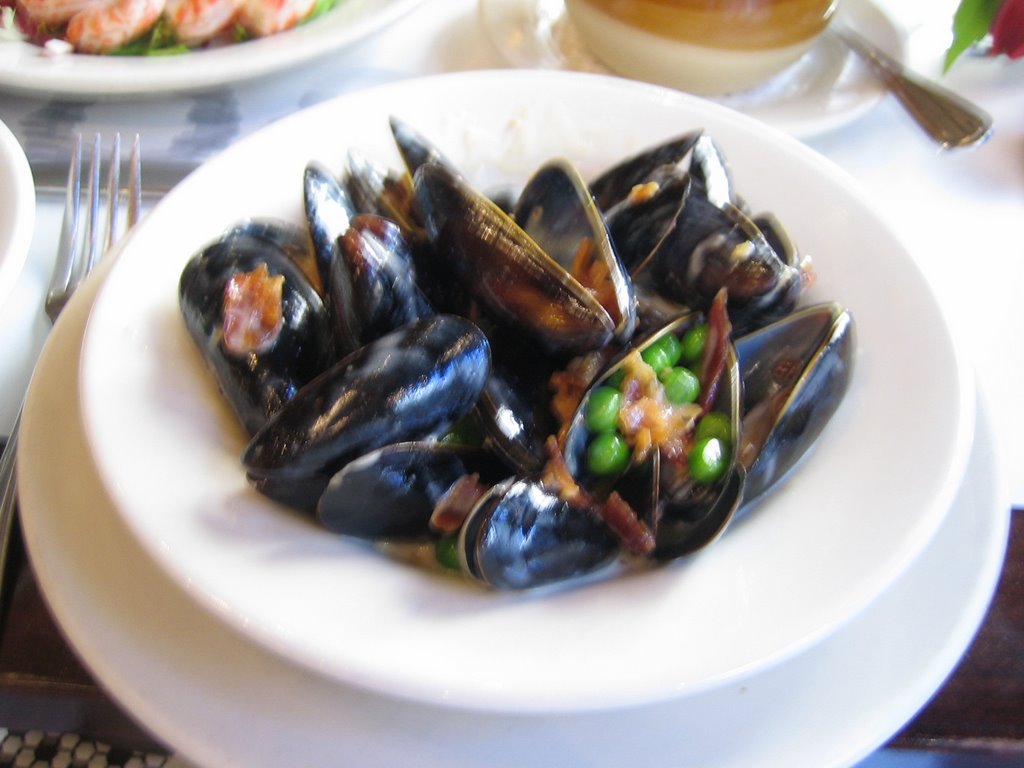
The Copycat Chef: Mussels with Bacon and Peas from Angus McIndoe
 Many reviewers, amateur and professional, have raved about the mussels at Angus McIndoe. They're true country comfort food, perfect for this time of year. As soon as I tasted the wonderful bacon-and-peas cream sauce, I thought of a recipe from The New Basics Cookbook, by the same authors of The Silver Palate: Pasta with Prosciutto and Peas, one of my all-time favorites.
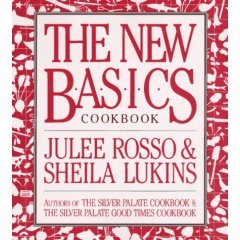 In a somewhat bastardized version of an Italian sauce, the prosciutto is sauteed slowly with butter and flour to make a light roux, then the cream and other ingredients are added. The Angus McIndoe cream sauce had the same bacony cohesiveness as the Rosso-Lukins version.
 The combination of mussels and cream was harder to source. Where did this come from? The recipe seems to owe more to Normandy, Brittany, and the Île de Ré, famed land of mussels, than Scotland. Anthony Bourdain's version of mussels in cream sauce has many of the same qualities as the Angus McIndoe dish. By subtracting some of the particularly French ingredients - Pernod, for instance - I might find a reasonable facsimile of the Angus McIndoe version.
I cooked the mussels in beer instead and added some of their cooking liquid to the cream sauce. Surprise: it was completely disgusting. Here I had bought a whole loaf of French bread to sop up the sauce, which I couldn't even stand to eat. It was horribly bitter, especially with the addition of parsley. The lesson: don't drink beer with cream. I thought I learned that over a decade and several White Russians ago, but I must have forgotten.
 Trying again, I took a page from Jacques Pepin and used his suggestion of Sancerre as an excellent cooking base for mussels. This worked a lot better. The final product, though, should really have a certain shine to it. The mussels at Angus McIndoe looked positively glazed, they were so shiny. This reminded me of Lidia Bastianich's Linguine with Bacon and Onions, in which an egg yolk is added at finishing time to achieve a similar shiny, thick sauce.
For the first version of this dish, I used real live peas instead of frozen ones, but then I figured, why bother. At Angus McIndoe, the peas were so evenly sized that they must have been frozen, and the flavor of frozen thawed peas was actually better in this sauce.
 In a dish this simple, the quality of the ingredients is even more important. For the first attempt, I went to Wild Edibles on Third Avenue and 35th Street (also at Grand Central Market) for the mussels. The salesguy there was very helpful and friendly, explaining why they only sell Prince Edward Island mussels and even knocking each of them before putting them in a plastic baggie to make sure the ones he sold me were all alive. The next time around, I went to Citarella, whose mussels were almost as good, but where the service wasn't quite as helpful. When I asked the Citarella salesguy where the mussels were from, he responded "Canada." Last I checked, Canada is a pretty big country. (They were also from P.E.I.) But, miracle of miracles, Citarella apparently has caved to popular demand and is now stocking their freezer with items a little less esoteric than just edamame beans: they finally carry frozen peas and other frozen vegetables.
 I used Schaller and Weber Black Forest bacon, which is the best I've found in the city. You can get it on Fresh Direct, but you have to go to a nice off-line grocery store like Garden of Eden on 14th Street to get it sliced thin, which is very important for this recipe.
A note to the fat-phobic: Though this is a seafood dish, it is decidedly not low-fat; in fact it's pretty much a heart-attack-in-a-bowl. Attempts to make a lower-fat version, using half & half instead of cream, for instance, failed and are not recommended.
Mussels with Bacon and Peas à la Angus McIndoe
Time: 35 minutes
1.6 lb. mussels
1/4 lb. bacon, very thinly sliced
1 tbsp butter
1 tbsp flour
1 cup heavy cream
1/2 cup frozen peas, thawed
1 tsp sea salt
several grinds of black pepper
3/4 cup Sancerre or other dry white wine
1/2 cup water
1 egg yolk
Scrub mussels under running cold water with a wire brush until their shells are clean and shiny. Check for any bits of beard poking out of the shells, and pull them out. (You probably will not find many, if any at all, with P.E.I. mussels.)
Heat the butter until foaming in a wide saute pan. Add the bacon, stir a couple times, and reduce the heat to medium-low. Cook for 1 minute, then sprinkle the flour over top and stir again. Continue cooking for about 3 minutes, until the bacon is wilted and has rendered a good deal of its fat.
Whisk in the cream and raise the heat to medium-high. Continue whisking until sauce begins to bubble and thicken, about 1 minute. Whisk in peas, salt, and pepper, and turn the heat down to the lowest temperature.
Bring the wine and water to a boil in a roomy pot, preferably fitted with a glass lid. Add the mussels and boil 3-4 minutes until they all yawn open widely, shaking the pot every once in a while to redistribute the mussels.
Scoop them out with a big wire skimmer, then carefully decant 2/3 cup of the cooking liquid, leaving any sandy residue at the bottom of the pot. Whisk the cooking liquid into the cream sauce, raise the heat to medium-high, and continue whisking 1 minute until the mixture begins to bubble and thicken again. Turn off the heat and mix in the egg yolk, then then mussels in their shells, tossing to mix the sauce evenly throughout.
Serve immediately with crusty country bread.
Serves 2.
9/28/2006
The Copycat Chef: Risotto with Mushroom Fricassée from Café Gray
Why cook? There isn't much need to in this town, home of 18,696 restaurants, many of which offer delivery to your door. It's instant gratification, it's indulgent, and best of all, it's often cheaper than buying the ingredients and slaving over a hot stove yourself.
Cooking is an activity that many consider quaint and vaguely self-sacrificing. But I assure you it is nothing of the kind. I cook because I am even more of a diva than those who rely solely on delivery. I can't stand pasta that isn't al dente. I won't eat Thai sauces that taste more like sugar than spice. And always, I want what I want when I want it, whether or not it is in my neighborhood and available for delivery. Thus, I learned to cook.
The Copycat Chef is a series that I will run at least once a month. In it, I attempt to recreate at home a particularly delicious dish I've had at a restaurant. It's kind of a game, and here are the rules:
1. The chef's recipe should be a secret one, not published in any of his or her cookbooks.
2. No one will tell me exactly what is in it.
3. It should be a signature recipe, very good, something you would crave when you think of that particular restaurant.

The mushroom risotto at Café Gray was an easy pick for this series. It is so good it made another reviewer actually lick her bowl, and it might even be the answer to somebody's if-you-could-only-eat-one-thing-for-the rest-of-your-life question.
I studied several things at Café Gray to come up with the recipe:
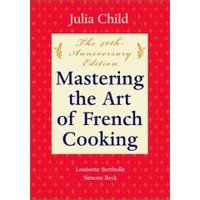 The Menu. The menu does not give away much; it says only "Risotto with Mushroom Fricassée." But the word "fricassée" is a good clue. As Julia Child explains in Mastering the Art of French Cooking, "The fricassée is halfway between [a saute and a stew]. When chicken is fricasséed, the meat is always cooked first in butter--or butter and oil--until its flesh has swelled and stiffened, then the liquid is added." So Gray Kunz has playfully adapted this technique to mushrooms.
 Taste. The risotto was of excellent quality, obviously made with lots of butter, but cut by a hint of something tart - lemon? There were some interesting herbs mixed in. The mushroom sauce was harder to pin down. What gave it that level of complexity and darkness of color? It reminded me of an ingredient more prevalent in Chinese cuisine: the liquid that dry mushrooms sit in when they are reconstituted, liquid which is often added to the main dish in cooking. I came back to the cafe again for a second tasting. Something about the mushroom sauce reminded me of French onion soup. Then it struck me: onion! And a dash of cognac.
Texture. As mentioned in the review, the risotto itself was not a glutinous mass, but a velouté mix the consistency of thick porridge. The mushroom sauce had the consistency of gravy, and the mushrooms themselves were still crunchy and slightly rubbery, as if they'd just barely been cooked. The reconstituted mushrooms were almost as plump as the fresh ones, which indicated that they had been soaking for quite a while.
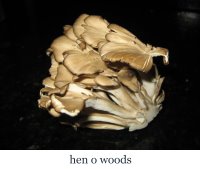
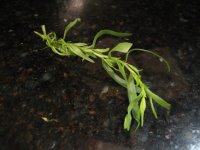 Appearance. The mushrooms involved were hen o woods, and a couple others I couldn't identify at first. One was an Alice-in-Wonderland toadstool-looking type. The dried were a mix of these and chanterelles, with the odd morel thrown in. Also, there was a sheen on top of the sauce, which meant - egad! - that not only had butter been used in the roux, more had been added to finish the sauce. The minced herb in the risotto looked to be tarragon.
Waiter Give-Aways. To elicit some clues from the waiter, I joked after devouring the whole dish of risotto that it was "non-fat, right?" He looked momentarily alarmed, as if I might be serious and about to sue, then realized I was kidding and said with a smile, "It's all butter and white wine." Interesting. I guessed there was a ton of butter - this is restaurant food, after all - but I didn't realize there was that much wine in it. White wine, not lemon, must provide the tartness to the risotto and the very French quality to the mushroom sauce.
 I began the quest for Gray Kunz's mushroom risotto in earnest. There were key things to consider, namely, supplies. Good mushrooms are hard to find, especially a good variety of "wild" mushrooms. But they are in season now in France and Italy, thus 'tis the season for mushroom fricassée. I did some research on eGullet (the wisdom of crowds definitely applies in NYC) and meandered down Avenue B. The place to which one poster refers on Avenue B just south of
 Tompkins Square Park is S.O.S. Chefs, which feels very secret and in-the-know, not just because they supply provisions for Per Se and Jean-Georges. The fresh mushrooms are kept in a refrigerated vault in back, and the very chic, knowledgeable proprietress takes you there and lets you inspect the wares. I chose some hen o woods and chanterelles, then picked up their "forest mix" of dried mushrooms, which proved to be a winner and the key to this dish.
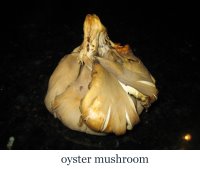 After another trip to Cafe Gray, I realized I was still missing some types of mushrooms, namely oyster mushrooms, morels, and fried chicken mushrooms (the Alice-in-Wonderland toadstool-looking ones). I went to the Garden of Eden on 14th off Union Square, which also has an excellent selection, though they had no morels. The head of produce there was
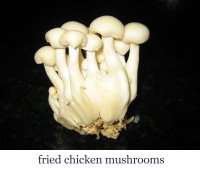 forthcoming yet evasive. He had morels six weeks ago, he could have them again, or maybe not. Mushrooms and sellers of mushrooms work in mysterious ways, it seems. "There are fifty varieties of mushrooms," he said. "We can't stock them all." Good point.
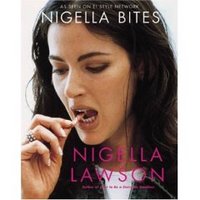 The recipe itself is based on the best recipe for risotto I've encountered, Nigella Lawson's Lemon Risotto (Nigella Bites), which is in turn based on Anna del Conte's recipe in Secrets of an Italian Kitchen. Food is like fashion in this regard: no need to reinvent the wheel when you can just pull something out of the archives and put a new spin on it. The mushroom fricassée evolved from a hodgepodge of recipes from Julia Child and The Joy of Cooking.
Et voilà:
Risotto with Mushroom Fricassée From Café Gray
Time: 2 hours 45 minutes. Active time: 45 minutes.
For the Fricassée:
1/2 cup dried mushrooms - a mix of chanterelles, morels, hen o woods, oyster
1 cup hot chicken broth, preferably organic
1 cup fresh mushrooms - hen o woods, oyster, fried chicken mushrooms, or whatever is flavorful, available and preferably French
2 tbsp flour
1/2 tsp salt
pinch white pepper
4 tbsp butter
1 tbsp olive oil
1/2 cup water
1/2 cup white wine - a dry Riesling or a floral Sauvignon Blanc
1/2 onion
1 bay leaf
2 sprigs fresh thyme
1 sprig parsley
dash of cognac
Pour the hot broth over the dried mushrooms and soak for at least two hours. You can soak them all day and finish the recipe in the evening if this is more convenient. Scoop out the mushrooms and carefully decant the soaking liquid into a saucepan, leaving the gritty residue of the mushrooms behind. Pick over the reconstituted mushrooms; separate out the tough bits and stems and discard. Prepare the fresh mushrooms: separate them into individual pieces, cutting stems as necessary.
Make a bouquet garni of the onion, bay leaf, thyme, and parsley. Add the water and wine to the mushroom liquid, pop in the bouquet garni, and bring to a boil. Cover and simmer over low heat.
Mix the flour, salt and pepper together in a small bowl. Heat 2 tbsp of the butter and the oil in a saucepan. Saute all the mushrooms, the reconstituted dried ones and the fresh ones, over medium-high heat for a minute. Sprinkle the flour mixture over all, saute for a minute more until the flour melds with the butter and oil, then pour in the mushroom broth, transferring the bouquet garni as you go. Bring it to a boil, then simmer on the lowest temperature, covered, for 10 minutes. The mushrooms should be crunchy, so don't overcook them. As with any fricassée, you can turn off the heat and reheat the sauce without any negative consequences.
For the risotto:
2 shallots
1 rib celery
1 tbsp olive oil
4 tbsp butter
2/3 cup arborio rice
1 quart chicken stock, preferably organic
1/4 cup grated Parmesan
1 egg yolk
2 tbsp white wine
1/4 cup half & half
salt and white pepper to taste
2 tbsp finely chopped tarragon
Bring the chicken broth to a boil, then cover and reduce to a low simmer.
Chop the shallot and celery to a pulp in a food processor. Heat 2 tbsp of the butter and the olive oil and saute the shallot mixture over medium-low heat for a few minutes, until softened. Add the rice and stir until thoroughly coated with the oil, about 1 minute. Add a ladleful of the broth and stir once. Wait until the rice settles to the bottom and the broth bubbles on top before you stir again. Stir several times and let it settle. Repeat until almost all the broth has been absorbed, then add another ladleful. Don't forget to salt the risotto to taste as you go.
It's a myth that you have to stir risotto "constantly." You can't really leave the room while you're making it, but you don't want to bother it too much, either. Stirring releases the glutens on the rice's surface and makes the mixture stickier. With the Café Gray risotto, you are aiming for a suspension of rice in thick liquid, not a gummy mass of rice. Don't overagitate it.
The stove is at the right medium-low temperature when it takes about a minute for a new ladleful of broth to start bubbling quickly at the surface.
When the rice is almost done: If, as you reach the end, you start running out of broth, dilute the remaining broth with hot water and forge ahead.
Whisk the Parmesan, egg yolk, half & half, and white wine together in a small bowl.
Finish the fricassée: Reheat the mushroom mixture and stir in the remaining 2 tbsp butter and a dash of cognac. Salt and pepper to taste.
When the rice is just al dente, the risotto is done. There should be about half a ladleful of liquid remaining with the rice, so that it is the consistency of porridge. Turn off the heat, then stir in the eggy mixture and the remaining 2 tbsp of butter. Salt and pepper to taste. Stir in the chopped tarragon.
Serve absolutely immediately. Pour the risotto into a bowl and the mushroom fricassée into a miniature silver tureen with a jaunty man on top, if you have it. If not, a ceramic dish will do.
Serves 2.
Cooking is an activity that many consider quaint and vaguely self-sacrificing. But I assure you it is nothing of the kind. I cook because I am even more of a diva than those who rely solely on delivery. I can't stand pasta that isn't al dente. I won't eat Thai sauces that taste more like sugar than spice. And always, I want what I want when I want it, whether or not it is in my neighborhood and available for delivery. Thus, I learned to cook.
The Copycat Chef is a series that I will run at least once a month. In it, I attempt to recreate at home a particularly delicious dish I've had at a restaurant. It's kind of a game, and here are the rules:
1. The chef's recipe should be a secret one, not published in any of his or her cookbooks.
2. No one will tell me exactly what is in it.
3. It should be a signature recipe, very good, something you would crave when you think of that particular restaurant.

The mushroom risotto at Café Gray was an easy pick for this series. It is so good it made another reviewer actually lick her bowl, and it might even be the answer to somebody's if-you-could-only-eat-one-thing-for-the rest-of-your-life question.
I studied several things at Café Gray to come up with the recipe:
 The Menu. The menu does not give away much; it says only "Risotto with Mushroom Fricassée." But the word "fricassée" is a good clue. As Julia Child explains in Mastering the Art of French Cooking, "The fricassée is halfway between [a saute and a stew]. When chicken is fricasséed, the meat is always cooked first in butter--or butter and oil--until its flesh has swelled and stiffened, then the liquid is added." So Gray Kunz has playfully adapted this technique to mushrooms.
 Taste. The risotto was of excellent quality, obviously made with lots of butter, but cut by a hint of something tart - lemon? There were some interesting herbs mixed in. The mushroom sauce was harder to pin down. What gave it that level of complexity and darkness of color? It reminded me of an ingredient more prevalent in Chinese cuisine: the liquid that dry mushrooms sit in when they are reconstituted, liquid which is often added to the main dish in cooking. I came back to the cafe again for a second tasting. Something about the mushroom sauce reminded me of French onion soup. Then it struck me: onion! And a dash of cognac.
Texture. As mentioned in the review, the risotto itself was not a glutinous mass, but a velouté mix the consistency of thick porridge. The mushroom sauce had the consistency of gravy, and the mushrooms themselves were still crunchy and slightly rubbery, as if they'd just barely been cooked. The reconstituted mushrooms were almost as plump as the fresh ones, which indicated that they had been soaking for quite a while.
 Appearance. The mushrooms involved were hen o woods, and a couple others I couldn't identify at first. One was an Alice-in-Wonderland toadstool-looking type. The dried were a mix of these and chanterelles, with the odd morel thrown in. Also, there was a sheen on top of the sauce, which meant - egad! - that not only had butter been used in the roux, more had been added to finish the sauce. The minced herb in the risotto looked to be tarragon.
Waiter Give-Aways. To elicit some clues from the waiter, I joked after devouring the whole dish of risotto that it was "non-fat, right?" He looked momentarily alarmed, as if I might be serious and about to sue, then realized I was kidding and said with a smile, "It's all butter and white wine." Interesting. I guessed there was a ton of butter - this is restaurant food, after all - but I didn't realize there was that much wine in it. White wine, not lemon, must provide the tartness to the risotto and the very French quality to the mushroom sauce.
 I began the quest for Gray Kunz's mushroom risotto in earnest. There were key things to consider, namely, supplies. Good mushrooms are hard to find, especially a good variety of "wild" mushrooms. But they are in season now in France and Italy, thus 'tis the season for mushroom fricassée. I did some research on eGullet (the wisdom of crowds definitely applies in NYC) and meandered down Avenue B. The place to which one poster refers on Avenue B just south of
 Tompkins Square Park is S.O.S. Chefs, which feels very secret and in-the-know, not just because they supply provisions for Per Se and Jean-Georges. The fresh mushrooms are kept in a refrigerated vault in back, and the very chic, knowledgeable proprietress takes you there and lets you inspect the wares. I chose some hen o woods and chanterelles, then picked up their "forest mix" of dried mushrooms, which proved to be a winner and the key to this dish.
 After another trip to Cafe Gray, I realized I was still missing some types of mushrooms, namely oyster mushrooms, morels, and fried chicken mushrooms (the Alice-in-Wonderland toadstool-looking ones). I went to the Garden of Eden on 14th off Union Square, which also has an excellent selection, though they had no morels. The head of produce there was
 forthcoming yet evasive. He had morels six weeks ago, he could have them again, or maybe not. Mushrooms and sellers of mushrooms work in mysterious ways, it seems. "There are fifty varieties of mushrooms," he said. "We can't stock them all." Good point.
 The recipe itself is based on the best recipe for risotto I've encountered, Nigella Lawson's Lemon Risotto (Nigella Bites), which is in turn based on Anna del Conte's recipe in Secrets of an Italian Kitchen. Food is like fashion in this regard: no need to reinvent the wheel when you can just pull something out of the archives and put a new spin on it. The mushroom fricassée evolved from a hodgepodge of recipes from Julia Child and The Joy of Cooking.
Et voilà:
Risotto with Mushroom Fricassée From Café Gray
Time: 2 hours 45 minutes. Active time: 45 minutes.
For the Fricassée:
1/2 cup dried mushrooms - a mix of chanterelles, morels, hen o woods, oyster
1 cup hot chicken broth, preferably organic
1 cup fresh mushrooms - hen o woods, oyster, fried chicken mushrooms, or whatever is flavorful, available and preferably French
2 tbsp flour
1/2 tsp salt
pinch white pepper
4 tbsp butter
1 tbsp olive oil
1/2 cup water
1/2 cup white wine - a dry Riesling or a floral Sauvignon Blanc
1/2 onion
1 bay leaf
2 sprigs fresh thyme
1 sprig parsley
dash of cognac
Pour the hot broth over the dried mushrooms and soak for at least two hours. You can soak them all day and finish the recipe in the evening if this is more convenient. Scoop out the mushrooms and carefully decant the soaking liquid into a saucepan, leaving the gritty residue of the mushrooms behind. Pick over the reconstituted mushrooms; separate out the tough bits and stems and discard. Prepare the fresh mushrooms: separate them into individual pieces, cutting stems as necessary.
Make a bouquet garni of the onion, bay leaf, thyme, and parsley. Add the water and wine to the mushroom liquid, pop in the bouquet garni, and bring to a boil. Cover and simmer over low heat.
Mix the flour, salt and pepper together in a small bowl. Heat 2 tbsp of the butter and the oil in a saucepan. Saute all the mushrooms, the reconstituted dried ones and the fresh ones, over medium-high heat for a minute. Sprinkle the flour mixture over all, saute for a minute more until the flour melds with the butter and oil, then pour in the mushroom broth, transferring the bouquet garni as you go. Bring it to a boil, then simmer on the lowest temperature, covered, for 10 minutes. The mushrooms should be crunchy, so don't overcook them. As with any fricassée, you can turn off the heat and reheat the sauce without any negative consequences.
For the risotto:
2 shallots
1 rib celery
1 tbsp olive oil
4 tbsp butter
2/3 cup arborio rice
1 quart chicken stock, preferably organic
1/4 cup grated Parmesan
1 egg yolk
2 tbsp white wine
1/4 cup half & half
salt and white pepper to taste
2 tbsp finely chopped tarragon
Bring the chicken broth to a boil, then cover and reduce to a low simmer.
Chop the shallot and celery to a pulp in a food processor. Heat 2 tbsp of the butter and the olive oil and saute the shallot mixture over medium-low heat for a few minutes, until softened. Add the rice and stir until thoroughly coated with the oil, about 1 minute. Add a ladleful of the broth and stir once. Wait until the rice settles to the bottom and the broth bubbles on top before you stir again. Stir several times and let it settle. Repeat until almost all the broth has been absorbed, then add another ladleful. Don't forget to salt the risotto to taste as you go.
It's a myth that you have to stir risotto "constantly." You can't really leave the room while you're making it, but you don't want to bother it too much, either. Stirring releases the glutens on the rice's surface and makes the mixture stickier. With the Café Gray risotto, you are aiming for a suspension of rice in thick liquid, not a gummy mass of rice. Don't overagitate it.
The stove is at the right medium-low temperature when it takes about a minute for a new ladleful of broth to start bubbling quickly at the surface.
When the rice is almost done: If, as you reach the end, you start running out of broth, dilute the remaining broth with hot water and forge ahead.
Whisk the Parmesan, egg yolk, half & half, and white wine together in a small bowl.
Finish the fricassée: Reheat the mushroom mixture and stir in the remaining 2 tbsp butter and a dash of cognac. Salt and pepper to taste.
When the rice is just al dente, the risotto is done. There should be about half a ladleful of liquid remaining with the rice, so that it is the consistency of porridge. Turn off the heat, then stir in the eggy mixture and the remaining 2 tbsp of butter. Salt and pepper to taste. Stir in the chopped tarragon.
Serve absolutely immediately. Pour the risotto into a bowl and the mushroom fricassée into a miniature silver tureen with a jaunty man on top, if you have it. If not, a ceramic dish will do.
Serves 2.
Subscribe to:
Posts (Atom)